Poster
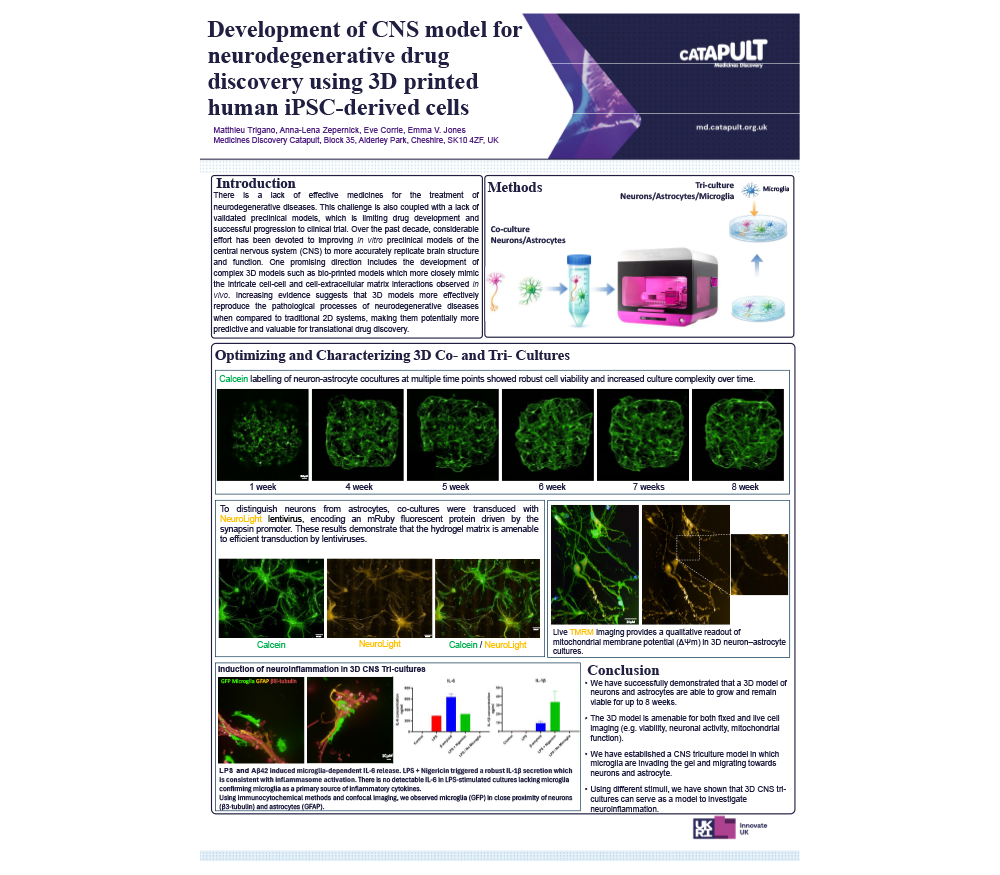
Development of CNS model for neurodegenerative drug discovery using 3D printed human iPSC-derived cells. There is a lack of effective medicines for the treatment of neurodegenerative diseases. This challenge is also coupled with a lack of validated preclinical models, which is limiting drug development and successful progression to clinical trial. Over the past decade, considerable effort has been devoted to improving in vitro preclinical models of the central nervous system (CNS) to more accurately replicate brain structure and function.
One promising direction includes the development of complex 3D models such as bio-printed models which more closely mimic the intricate cell-cell and cell-extracellular matrix interactions observed in vivo. Increasing evidence suggests that 3D models more effectively reproduce the pathological processes of neurodegenerative diseases when compared to traditional 2D systems, making them potentially more predictive and valuable for translational drug discovery.
View the poster here


PACE (Pathways to Antimicrobial Clinical Efficacy) and the UK Health Security Agency (UKHSA) have released five new contemporary antimicrobial resistance (AMR) strain panels, giving innovators worldwide a resource to test novel therapeutics and diagnostics against today’s resistance patterns.

New appointments support MDC’s mission to turn drug discovery into commercial breakthroughs.